In And Out Of Love – A Brief History of
Holland-Dozier–Holland
Introduction
Holland-Dozier-Holland (H-D-H) were one of the
most successful song writing and production teams in the history of popular
music.

The trio, while working for Berry Gordy Jr’s
Detroit-based Tamla, Gordy and Motown record labels, were collectively responsible
for some of the best known songs recorded during the 1960s.
Some of the hits created by brothers Eddie
and Brian Holland, in collaboration with Lamont Dozier, include:
·
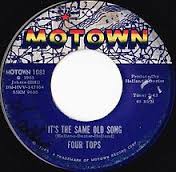
“It’s The Same Old Song”,
“Reach Out I’ll Be There” and “I Can’t Help Myself” by The Four Tops
·
“Where Did Our Love Go”,
“Baby Love” and “You Keep Me Hanging On” by The Supremes
·
“How Sweet It Is (To Be
Loved By You)” which was a hit for both Marvin Gaye and Junior Walker & The
All Stars
·
“Heat Wave”, “Nowhere ToRun” and “Jimmy Mack” by Martha Reeves & The Vandellas

As a
song writing team, Holland-Dozier-Holland are credited with more than two dozen
US Top 10 records, including many number ones, and countless R&B hits.
Their success spread across the Atlantic Ocean to the United Kingdom, Europe
and around the world.
Beginnings
Brian Holland
 Brian Holland was born in Detroit on 15th
February 1941. Brian debuted as a solo singer in 1958 on gospel label, Kudo
Records. The record, whose flip side was written by Berry Gordy, was a total
flop. His name was even misspelled as Briant Holland.
Brian Holland was born in Detroit on 15th
February 1941. Brian debuted as a solo singer in 1958 on gospel label, Kudo
Records. The record, whose flip side was written by Berry Gordy, was a total
flop. His name was even misspelled as Briant Holland.
Holland then joined his neighborhood friend
Freddie Gorman in a doo-wop group, The Fidalatones before singing lead with The
Satintones.
Following a spell together in the Motown
backing group, The Rayber voices, Holland and Robert Bateman, together dubbed ‘Brianbert’,
penned the most successful Motown hit song to date, “Please Mr Postman”, for
The Marvelettes.
Brian was then teamed up with Gorman and
Lamont Dozier as a song writing and production team; Gorman was later replaced
by Brian’s older brother, Eddie Holland.
Lamont Dozier

Lamont Dozier was born in Detroit on 16th
June 1941. He started singing at the age of 13 for a group named The Romeos,
who were signed to Atco Records.
Following R&B chart success with their
song, “Fine Fine Baby”, The Romeos split up.
Dozier joined The Voicemasters,
who recorded for Anna Records, formed by and named after Anna Gordy, Berry
Gordy’s sister.
While at Anna, Lamont recorded his first solo
disc, “Let’s Talk It Over”, under the name of Lamont Anthony.
In 1962, following advice from Robert Bateman, Dozier joined Freddie
Gorman and Brian Holland at the Hitsville studios.
Eddie Holland
 Eddie Holland was born on 30th
October 1939 in Detroit. Eddie met Berry Gordy in 1958.
Eddie Holland was born on 30th
October 1939 in Detroit. Eddie met Berry Gordy in 1958.
Gordy wrote and
produced Holland’s debut single on the Mercury label, “You”, as well as
“Merry-Go-Round” which Gordy initially released on his Tamla label, but
subsequently arranged for United Artists to distribute.
Gordy recorded three more songs on Holland on
the United Artists label before switching him to his own fledgling Motown
imprint.
Eddie Holland’s debut single on the Motown
label was “Jamie”, a record that received some local success. Holland went on
to record several more songs for Gordy.
Holland modeled himself on Gordy’s close
friend Jackie Wilson and although he recorded twenty solo singles and one
album, he hated performing live. He suffered from stage fright and eventually
joined his younger brother Brian and Lamont Dozier as a lyricist.
The Dispute with Motown
Eddie Holland had grown resentful towards
Berry Gordy over the years. The phenomenal success of the records penned and /
or produced by Holland-Dozier–Holland, particularly for the Supremes and the
Four Tops, had left Eddie protesting that he and his team deserved greater
reward for their efforts.
 |
| Berry Gordy Jr. |
Berry Gordy would not bow to Holland’s
demands for a shareholding in the equity of the company despite Eddie’s belief
that the exponential growth that Motown was enjoying was almost solely the
result of H-D-H’s labour. In a vain attempt to placate his erstwhile friend and
ally, Berry put Eddie Holland in charge of A & R, following the departure
of Mickey Stevenson in early 1967.
This ‘promotion’ only served to strengthen
Eddie Holland’s disenchantment with his former friend whom he now ingloriously
referred to as “boss”. The final blow
for Holland was Gordy’s refusal to grant Eddie an interest free loan in order
to buy a property.
The dispute came to a head
in
November when, inspired by the wildcat strikes rife in the Detroit auto industry,
Eddie Holland decided to withdraw his labour.
He stayed at home while Gordy was away working on projects in Motown’s West Coast offices in Los Angeles.
Berry Gordy was also preoccupied with another difficult situation, the impending split among The Supremes.
Founding member Florence Ballard was about to be replace by Cindy Birdsong of
Philadelphia – based group Patti Labelle & The Bluebelles.
 |
| The Supremes (L-R Florence Ballard, Mary Wilson, Diana Ross |
Eddie Holland refused to produce any more
Motown sessions while secretly stockpiling songs that he had written in readiness
to set up his own recording company.
Gordy attempted to use Eddie’s younger
brother, Brian, with whom Gordy had struck up a friendship pre-dating Motown,
as a go-between, but Eddie’s mind was made up.
With no new product emanating from his star
writing and production team, Gordy threatened to sue for breach of contract in
a vain attempt to bring Eddie Holland back to his senses.
Holland-Dozier-Holland, represented by
ambitious black lawyer, Edward F. Bell, countersued for $22 million, citing
“Conspiracy, fraud, deceit, overreaching and breach of fiduciary arrangements”.
Berry Gordy argued that artists and producers were treated better at Motown than at other record companies; also, Holland-Dozier-Holland benefited from Gordy’s practice of allowing producers to continue working with the same artist following a hit.
The reality was that Holland-Dozier-Holland
were actually quite well paid in an industry that was notorious for ripping off
its creative people.
Eddie Holland admitted that some companies
didn’t pay their artists or writers but countered that once the lawyers got
hold of the case it took on a life of its own.
Gordy, despite being urged by friends to settle the case,
was adamant that he would not back down.
Moreover, it is believed that it was Motown’s legal team that was calling the shots despite Gordy’s seemingly determined stance.
Holland-Dozier-Holland continued to write
songs but published them using the pseudonym, Edyth Wayne, because they
couldn’t use their own names while the dispute with Motown continued.
Motown song writer Ron Dunbar worked with
Holland-Dozier-Holland on their new projects, hence the writing partnership
Wayne – Dunbar that was responsible for future Invictus hits such as “Band Of
Gold” and “Give Me Just A Little More Time” by Freda Payne and The Chairmen Of
The Board respectively.


The legal suit from Bell consisted of
thirty-two pages, including accusations that neither Brian Holland, who joined
Gordy in 1957, nor Holland-Dozier-Holland, established as a song writing and
production team since 1961, had ever seen a contract.
It was alleged that since 1961 Gordy had
continually promised to transfer Motown stock to Brian Holland. Bell also
accused Jobete, the song publishing company owned by Motown, of underpaying
Holland-Dozier-Holland in royalties.
Smokey Robinson, who had worked closely with
Berry Gordy in getting Motown off the ground, was apparently furious with the
Holland brothers and Lamont Dozier.
 |
| Smokey Robinson |
A prominent song writer for Motown, as well
as lead singer of the Miracles, Robinson leaped to the defence of his close
friend and ally.
In a strongly worded press release in his
name, although widely believed to have been orchestrated by the Motown
management team, Robinson poured scorn on the allegations that
Holland-Dozier-Holland had been cheated.
Smokey insisted that it was company policy to
pay artists and song writers whatever monies were due.
Shelly Berger, the Hollywood-based manager of
The Supremes, also defended his beleaguered boss. Following the discontent
among other Motown artists and writers that had arisen following the H-D-H
dispute, Berger pointed out that none of the artists had to worry about filing
their tax returns.
 |
| Shelley Berger |
The company always filed the returns of their
behalf. This was due to Motown keeping monies in individual accounts in the
names of artists as escrow. Berger maintained that this practice actually protected
the artists.
Berger claimed that Gordy, and his
accountants, prevented the artists from going the way of other black artists
who had been taken advantage of by more dubious characters in the music
business.
Regardless of the rights and wrongs in the
dispute between Holland-Dozier-Holland and Motown, the cases dragged on for two
years before finally being settled out of court.
The battle between H-D-H and Berry Gordy
would continue well into the 1970s. The former claimed that Motown blacklisted
them and used their influence to block potential partnerships. Gordy in turn
accused H-D-H of having begun working on their own projects while still under
contract with Motown.
Invictus / Hot Wax / Music Merchant
Holland-Dozier-Holland finally launched their
independent labels, Invictus and Hot Wax, in 1969.

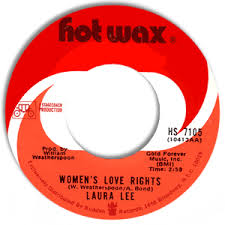
Invictus was distributed through Capitol Records, while Buddah distributed Hot Wax.
Invictus artists included Freda Payne, The
Chairmen Of The Board, Glass House and The 8th Day.
Honey Cone, 100 Proof Aged In Soul) and The
Flaming Ember were among the artists signed to Hot Wax.
Laura Lee had records released on both
labels.
H-D-H launched a third label, Music Merchant,
also distributed by Buddah, in 1972. Former Motown chanteuse, Brenda Holloway,
recorded for Music Merchant, along with The Jones Girls and Eloise Laws.
Chart Success
Freda Payne had two gold records in the US,
“Band Of Gold” and Bring The Boys Home”. The Chairmen Of The Board sold a
million copies of “Give Me Just A Little More Time”; “He’s Not Just Another
Woman” by 8th Day was also accredited gold status.
In September 1970, Invictus held the number
one and two positions in the UK chart with “Band Of Gold” and “Give Me Just A
Little More Time”.
Honey Cone enjoyed two US number one hits
with “Want Ads” and ”Stick Up”.
“Somebody’s Been Sleeping In My Bed” by 100
Proof (Aged In Soul), “Rip Off” by Laura Lee and “Westbound Number Nine” by The
Flaming Ember were all hits in the United States.
Financial Issues
The Hot Wax label was closed down in 1973 due
to cash flow problems. H-D-H moved all their artists on to their Invictus
label.
In 1977 Invictus folded and the labels were
incorporated into HDH Records.
Holland-Dozier-Holland still own the
catalogue which is managed by HDH Records.
Recent releases include a 14 x CD box set of
all the 45s released on the Invictus, Hot Wax and Music Merchant labels; HDH
have also made available a box set of previously unreleased 7” singles.
Later Developments
Lamont Dozier
Lamont Dozier returned to recording as a solo
singer.
His biggest hit was on ABC Records in 1974
with “Trying To Hold On To My Woman” which reached number 15 in the US pop
charts.
Lamont went on to record albums with ABC
Records, “Black Bach”
 and Warner Brothers, where he released “Peddlin’ Music On
The Side” in 1977. The latter album spawned “Going Back To My Roots” which was
later a hit for Odyssey.
and Warner Brothers, where he released “Peddlin’ Music On
The Side” in 1977. The latter album spawned “Going Back To My Roots” which was
later a hit for Odyssey.
Dozier also enjoyed further success as a
composer, co-writing “Two Hearts” and “Going Loco In Acapulco” with Phil
Collins for the soundtrack of the movie “Buster”.
Dozier later worked with Alison Moyet and
Mick Hucknall of Simply Red.
Brian Holland
Brian Holland continued to work as a producer;
his projects included the 1978 Donny and Marie Osmond LP, “Winning Combination”.
Together Again
Holland-Dozier-Holland revisited their
partnership in 1999 to compose the score for the stage musical production of
“The First Wives’ Club”.
References
George, Nelson "Where Did Our Love Go" 1986 ISBN 0.7119.9511.7
Cosgrove, Stuart "Detroit 67" 2015 ISBN 978-1501075988
Kellman, Andy Biography of Eddie Holland
Lamont Dozier's website
Hogan, Ed Biography of Lamont Dozier
Ankeny, Jason Biography of Brian Holland


